







Behind the Design of VIA—PAX Tarot
Creating a Deck for Reflection, Intuition, and Personal Growth
Holding these decks in my hands for the first time felt surreal. What began as a quiet idea years ago—shaped through reflection, experimentation, and countless iterations—has now become something tangible.
When I launched VIA and PAX on Kickstarter, I hoped the project might resonate with others who were seeking for a more reflective approach to tarot. Watching the campaign reach its funding goal—and seeing the support from readers, collectors, and fellow seekers around the world—was both humbling and deeply affirming.
As these decks move from idea to reality, I want to share the intention, philosophy, and creative journey behind their creation.
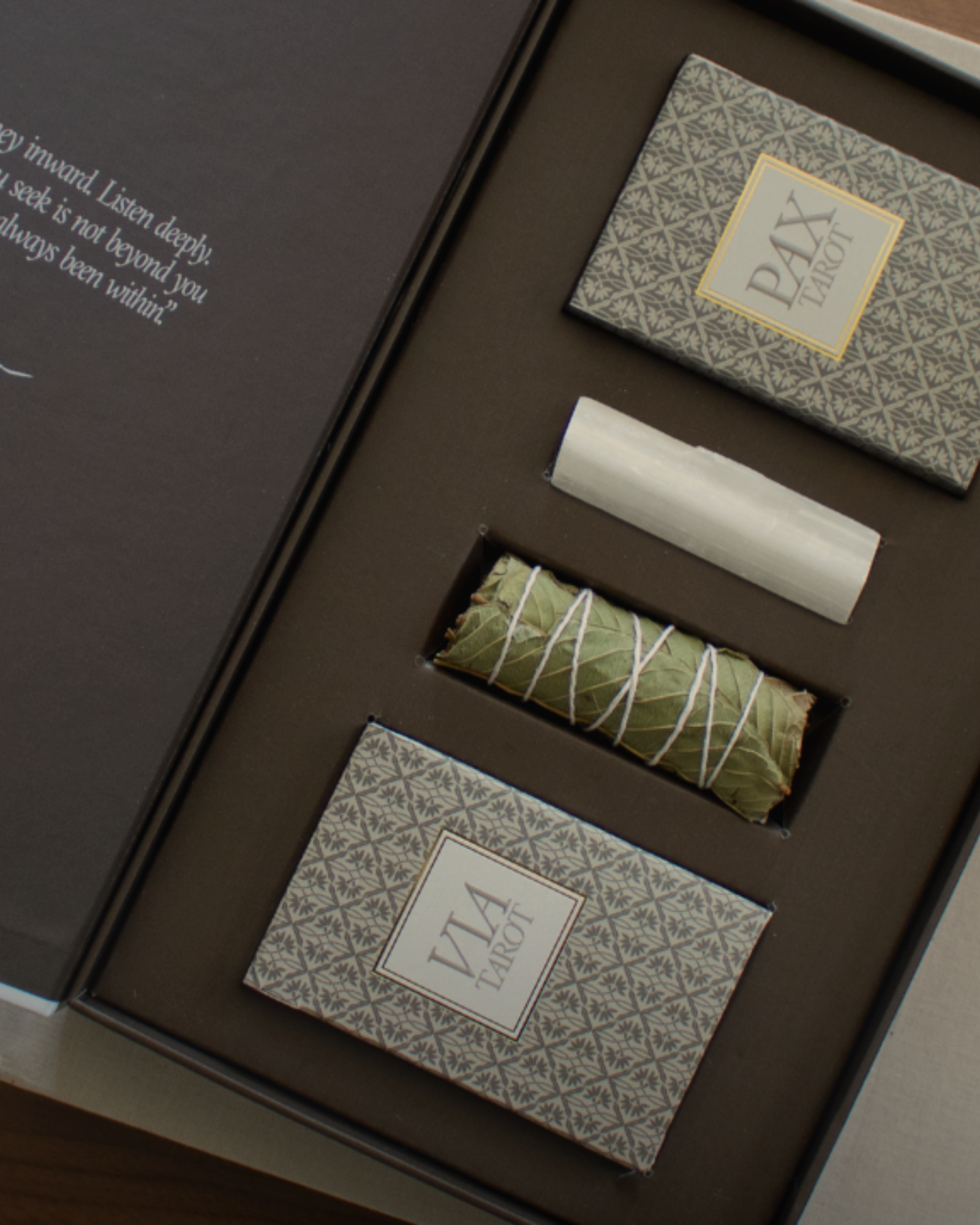
Every aspect of these decks was thoughtfully designed to be more than a set of cards. They are tools for self-reflection, intuitive connection, and personal growth. From the cardstock and finishes to the artwork and language of the cards, my goal was to create an experience that feels both timeless and accessible—honoring tarot’s rich history while making it approachable for modern readers.
The Backstory
My relationship with tarot began long before I started offering professional readings in 2020. For years, I read for friends and family, using tarot as a tool for reflection and conversation. When they encouraged me to share readings publicly, I hesitated.
But during the pandemic, I noticed how deeply people were craving clarity and connection. Tarot can be a powerful mirror—not as a tool for predicting the future, but as a way to explore possibilities, reconnect with our intuition, and better understand our inner world.
At the same time, I recognized a limitation. There were only so many people I could support through one-on-one readings. I began wondering if there was a way to create something that would allow people to engage in meaningful self-inquiry on their own—without needing a tarot reader to interpret the cards for them.
The desire to create a tool for self-reflection wasn’t entirely new. Nearly a decade earlier, I had developed a guided journal under the name The Painted Moth. The journal contained structured exercises designed to help people process their thoughts, emotions, and limiting beliefs. I shared early copies with therapists and psychologists whose patients found the exercises helpful.
Yet something about it didn’t resonate with me. The structure felt too rigid—as if the journal was trying to guide the user rather than allowing them to meet themselves exactly where they were.
Years later, I realized what was missing… Tarot.
Tarot offered something that journal prompts alone could not—fluidity. Instead of guiding someone through a predetermined set of questions, tarot creates a space where reflection evolves organically. Each card becomes a mirror that invites curiosity and deeper inquiry.
Rather than prescribing answers, tarot helps us ask better questions. It invites us to pause, reflect honestly, and listen more closely to our inner voice.
That realization became the seed that eventually grew into VIA and PAX.
The Intention
When I began designing these decks, I spent a long time asking myself what would truly make them meaningful. The tarot market is saturated, so it was important for me to create something that felt purposeful—not just visually distinctive, but genuinely useful as a tool for reflection and personal growth.
At one point I asked myself a simple question:
Who am I designing this for?
And soon I realized I was designing these decks for me… my past self—the version of me who struggled with self-doubt, uncertainty, and feeling disconnected from my intuition. I wanted to create something for people who longed for a practice that felt grounded, intuitive, and approachable—a tool that could meet them exactly where they were.
Through my own experiences, I’ve come to believe that trauma and challenging life experiences can cause us to mistrust ourselves, weakening our connection to our inner voice—our intuition. When that connection fades and weakens, we often begin seeking validation outside ourselves instead of listening to the quiet wisdom we already have within.
Working with tarot helped me rebuild that relationship with myself. Card by card, reflection by reflection, it became a practice that encouraged me to trust my own voice again.
Because tarot isn’t about searching for answers outside of ourselves.
It’s about learning to listen, reflect, and trust what we already know.
The Decks
VIA and PAX were designed to work together as companions on the inward journey.
The name VIA comes from Latin, meaning way or path. PAX means peace. Together, they represent a pathway to peace—symbolizing a personal journey toward balance and clarity with tarot as a guide.
While each deck can stand on its own, they were intentionally created to complement one another. VIA invites reflection on the deeper lesson or energy present in your life, while PAX offers intuitive imagery that can illuminate the path forward.
One invites you to pause. The other encourages you to move forward with clarity.
Together, they create a rhythm for navigating life—one that honors both stillness and movement.
VIA Tarot
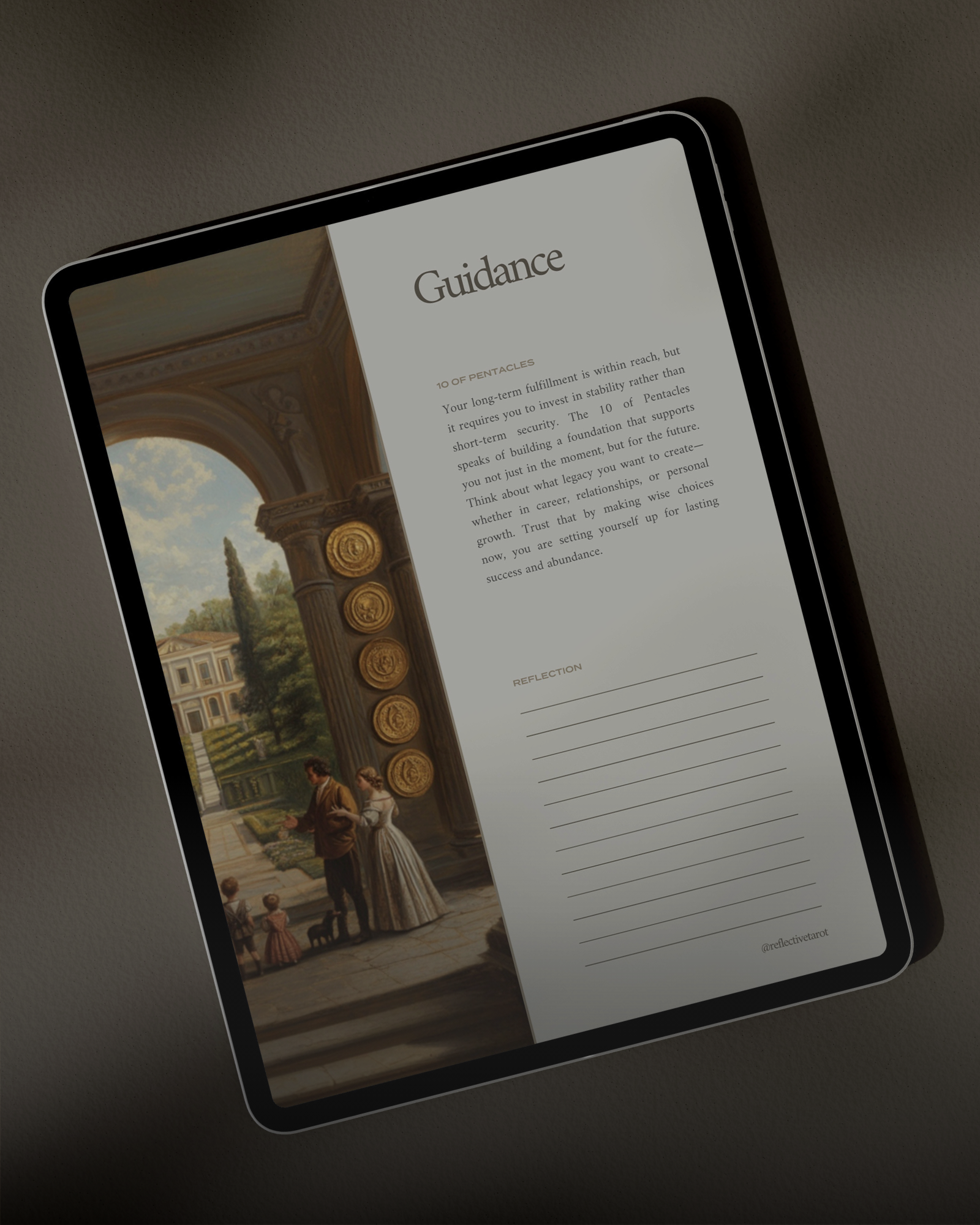
VIA was designed as a tarot–oracle hybrid, blending the structure of traditional tarot with the accessibility of oracle decks.
Each card includes:
- an affirmation to shift perspective
- an actionable keyword to provide focus
- a journal prompt to encourage deeper reflection
My intention was to create more than just a deck for pulling cards. VIA is meant to support a reflective practice—helping you reconnect with your inner truth through intentional inquiry.
Visually, VIA embraces a calm, duo-tone palette inspired by grounding earth tones. The muted colors create a sense of stillness, encouraging readers to slow down and reflect.
The lino-style patterns used throughout the deck resemble the natural curves that can be seen on fingerprints and topographic maps—symbolic of the personal journey each reader takes.
Like a fingerprint, your path is uniquely your own.
And like a map, tarot can help guide you through the terrain of your inner landscape.
PAX Tarot
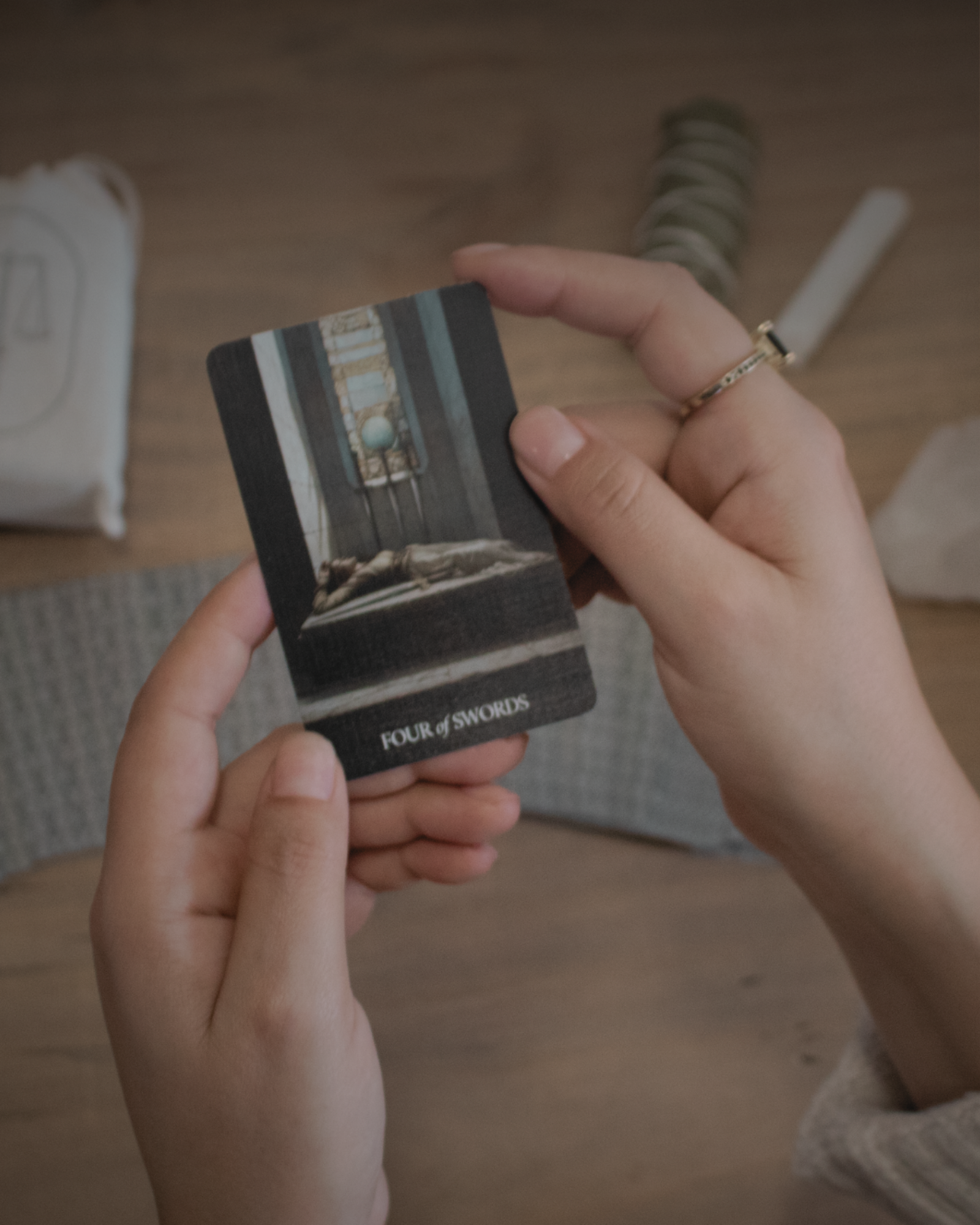
While VIA invites reflection, PAX focuses on intuitive imagery and symbolic storytelling.
From the beginning, I wanted PAX to honor the traditional Rider–Waite–Smith tarot system while still feeling refined and contemporary. I’ve always connected most deeply with tarot imagery that remains close to this tradition, so PAX was designed as a bridge between classical symbolism and modern accessibility.
The deck draws inspiration from the Renaissance—a period defined by curiosity, artistry, and intellectual awakening. During this time, people sought wisdom through art, science, and philosophy. And that spirit of renewal deeply resonated with me.
For me, tarot represents a similar process of reinvention. It invites us to reflect on our lives, ask meaningful questions, and continually evolve.
Each illustration in PAX is meant to feel like a conversation with your intuition. The imagery blends classical symbolism with a contemporary visual lens, creating cards that feel both familiar and fresh.
Whether you’re navigating change, seeking direction, or simply checking in with yourself, PAX offers a moment of quiet clarity.
The Mindful Arcana
Years ago, I tried to create a “What Tarot Card Are You?” quiz, but narrowing seventy-eight archetypes into a few outcomes proved impossible.
That challenge eventually led me to create something new.
The Mindful Arcana represents a series of archetypes that reflect the internal journey we experience during periods of growth and transformation.
Each archetype represents both a stage and mindset within that process:
- The Seeker — asking the questions that spark clarity
- The Traveler — embracing new possibilities with openness
- The Explorer — expanding perspective through curiosity
- The Observer — cultivating awareness through reflection
- The Navigator — translating insight into intentional action
These archetypes serve as guideposts—reminding us that growth is rarely linear, and that meaningful change unfolds through cycles of curiosity, reflection, and integration.
The Artwork
Bringing these decks to life presented a unique creative challenge. Illustrating more than eighty tarot images is an enormous undertaking, and because I was fully self-funding the project, commissioning artwork at that scale simply wasn’t financially feasible.
Generative AI became a tool that allowed this vision to become possible.
I understand that AI in art is a complex and often controversial topic. Before using it, I spent a great deal of time considering the ethical implications. My goal was to approach the process thoughtfully and responsibly.
I structured prompts using only public-domain artwork as reference material—drawing from historical imagery rather than modern artists or contemporary styles. This allowed the visuals to remain rooted in history while avoiding the appropriation of living artists’ work.
Each image was then manually refined, edited, and adjusted to align with traditional tarot symbolism and the visual language of the decks. The process was far from automated—it required careful hands-on iteration to bring the images into alignment with the overall aesthetic and intention.
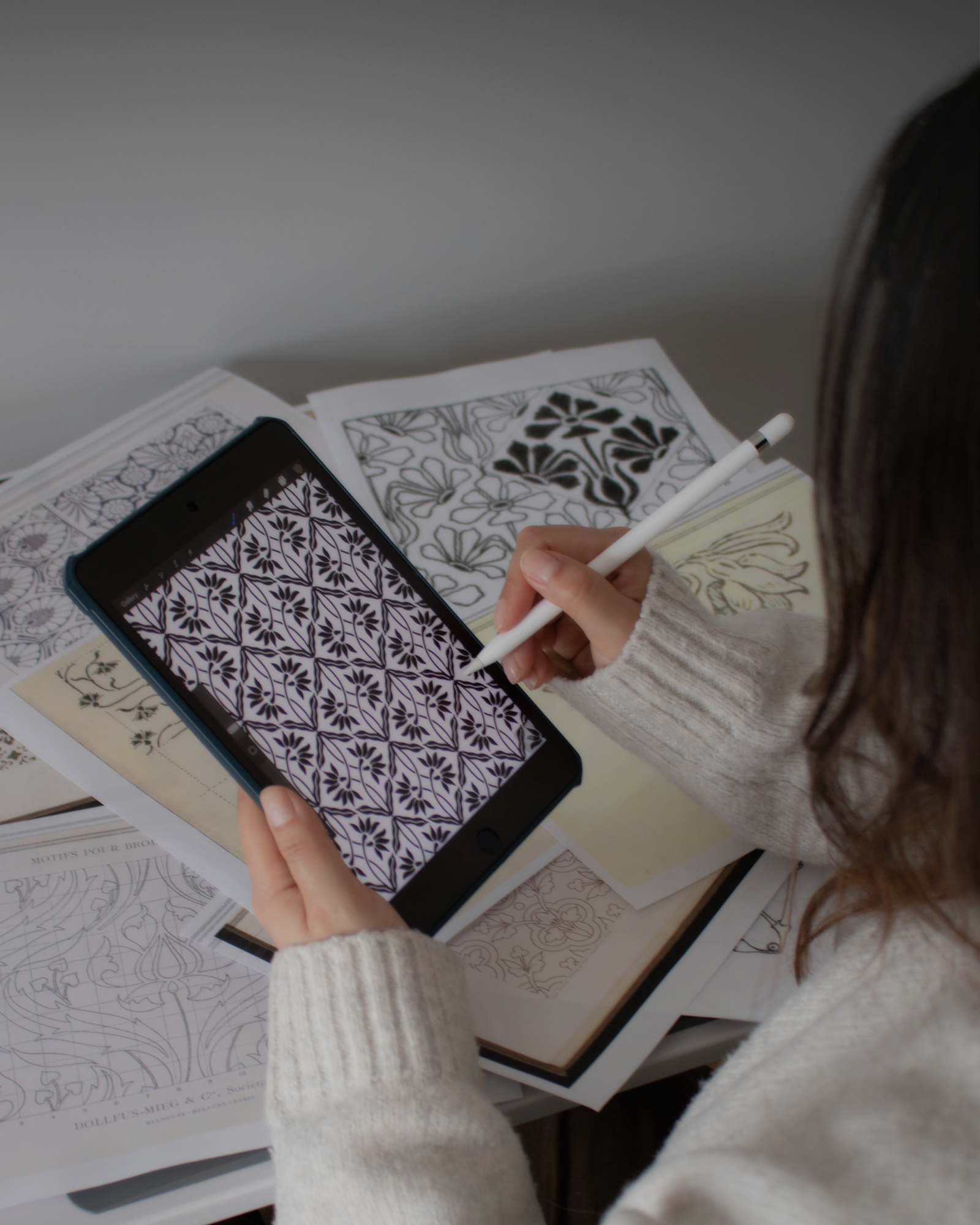
While AI-assisted design helped shape the imagery, this project was also enriched through collaboration with talented artists. Valeriia created the floral patterns used for the card backs and tarot cloths, while Sami helped refine the tuck box design and tarot cloth spreads. Their creative contributions added depth, beauty, and cohesion to the final presentation.
Beginning Your Practice
Tarot is ultimately a practice of reflection. There is no single “correct” way to work with the cards—only the method that feels most meaningful for you.
Many people begin by drawing a single card each day and sitting with the message it offers. With VIA, you might read the affirmation and journaling prompt as an invitation to pause and reflect. With PAX, you might spend a moment observing the imagery and noticing what emotions, memories, or insights arise.
You can also work with the decks together.
For example, you might draw a card from VIA to explore the underlying theme or lesson present in your life, then draw a card from PAX to gain intuitive insight into how to move forward.
You can also approach the decks in the opposite way. Drawing from PAX first allows the imagery to spark an intuitive response, after which a card from VIA can offer language and reflection to help clarify what the message may be asking of you.
The two decks were designed to complement one another in this way—creating a dialogue between intuition and reflection.
However you choose to work with them, the most important element is presence. Tarot becomes meaningful not through prediction, but through attention—through the willingness to ask honest questions and listen carefully to what emerges.
Over time, the cards become less about interpretation and more about relationship: a relationship with your intuition, your inner landscape, and the unfolding path of your life.
From Concept to Creation
The VIA and PAX Tarot project was successfully funded on Kickstarter thanks to the support of an incredible community of backers. What began as a personal exploration into creating Reflective Tarot has now become something shared by readers around the world.
Creating these decks has been an exercise in trust—trust in the vision, the process, and the belief that something meaningful would emerge along the way.
Every decision—from card size to paper texture—was made with care. Every illustration, phrase, and design detail was chosen intentionally to create a tarot experience that feels inspiring, grounded, and personal.
This project began with a simple desire: to help people reconnect with themselves through reflection and intuition.
My hope is that these decks support you on your own inward journey—whether you are seeking clarity, rebuilding self-trust, or simply learning to listen more closely to your inner voice.
Thank you for being here, and for allowing this work to become part of your story.
With gratitude,

Read more

Years ago, I found myself caught in a cycle that felt impossible to break—constantly moving, constantly giving, constantly being pulled in every direction except the one that led back to myself. My...

Tarot is more than just a tool for navigating significant life decisions; it can be a daily source of insight and clarity. Integrating tarot into your routine allows you to tap into your intuition ...